Jane
Recessed lighting often receives the most attention in interior design, but many real projects do not allow channels to be cut into furniture, ceilings or walls. The furniture may already be installed, the surface may be too thin for a recess or the client may want a lighting system that can be added with minimal construction work. Surface-mounted aluminum profiles solve these situations by placing the LED strip in a finished channel fixed directly to the existing surface.
The result can still look precise and integrated when the profile is selected and positioned carefully. Surface mounting also has practical advantages because the channel remains accessible for installation, cleaning and service.
Surface mounting works well in finished interiors
A recessed profile requires preparation before the final surface is complete. A surface-mounted profile can be added later to kitchen cabinets, wardrobes, shelves, ceilings or walls with much less disruption. This makes it useful for renovation projects and lighting upgrades.
Under a kitchen wall cabinet, the profile can be fixed directly to the underside without routing a groove. Inside a wardrobe, it can run vertically along a side panel. On a display shelf, it can be positioned near the front or rear depending on whether the goal is task lighting or a background glow.
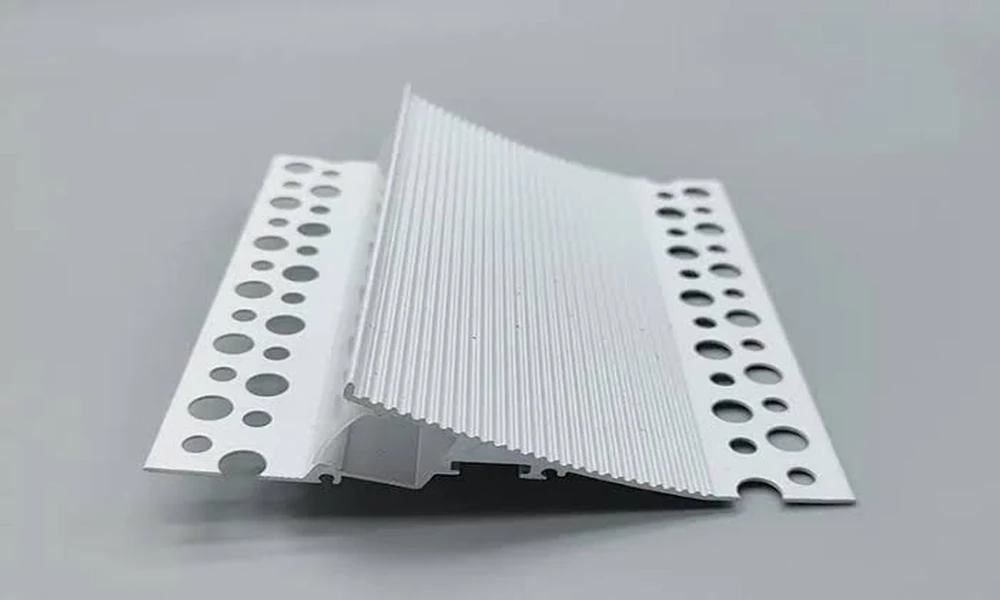
A suitable Aluminum profile for LED Surface-mounted gives the strip a rigid housing and a finished appearance even when the channel remains fully visible.
Position matters more when the profile is visible
Because a surface-mounted profile sits above the material rather than inside it, its placement becomes part of the visual design. A channel under a cabinet should be aligned with the furniture edges. A profile on a wall should follow a clear architectural reference rather than appear randomly attached.
The viewing angle matters too. Moving a cabinet profile slightly back from the front edge can hide the diffuser from normal standing height while still lighting the worktop. On a shelf, placing the profile near the rear creates a wall wash, while placing it near the front directs more light onto displayed objects.
Careful positioning can make a surface-mounted profile look intentional rather than temporary.
Aluminum protects and supports the LED strip
An LED strip is flexible, but that flexibility is not always an advantage after installation. Long strips can wander from a straight line, adhesive can release from difficult surfaces and exposed circuitry is vulnerable to contact during cleaning.
The aluminum channel provides a rigid mounting surface. It also helps transfer heat away from the strip, which is useful for higher-output lighting. The diffuser protects the LEDs from direct touch and changes the visible light from a row of points into a cleaner line.
This is especially valuable in kitchens and wardrobes where the lighting sits close to hands, clothing or stored objects.
Mounting clips make the system easier to service
Many surface profiles use clips that are screwed to the furniture or wall first. The aluminum channel then snaps into the clips. This separates the fixing process from the profile itself and can make alignment easier.
Clip mounting also allows the profile to be removed for service without damaging the surface. If a cable connection needs attention, the channel can be released, repaired and reinstalled.
Spacing should be sufficient to keep the profile straight. Long sections need more than one or two fixing points, particularly on ceilings where gravity constantly loads the clips.
Adhesive mounting is possible in some installations, but the surface must be clean and suitable for the adhesive. Mechanical fastening is more predictable where the profile may be touched or where the surface finish is uncertain.
Diffuser selection changes the appearance
A surface-mounted profile is often directly visible, so the diffuser has a strong effect on the design. Opal covers create a softer luminous line and reduce the visibility of individual LEDs. Transparent covers preserve more direct output but reveal the strip more clearly.
The profile depth and LED density determine how smooth the line appears. A shallow profile with widely spaced LEDs can show visible points through a frosted diffuser. COB strips or denser SMD strips produce a more continuous result.
The colour of the aluminum body also matters. Anodized silver suits technical and contemporary interiors. Black profiles create a graphic line even when the light is off. White profiles blend into pale furniture and ceilings.
Surface profiles are useful for task lighting
Under-cabinet kitchen lighting is one of the clearest applications. Ceiling lights often create shadows on the worktop because the person preparing food stands between the ceiling source and the counter. A surface profile places the LED strip directly above the working area.
Neutral white light is commonly used because it provides clear visibility without the cold appearance of very high colour temperatures. The profile can run continuously across a group of cabinets or be divided into sections according to furniture layout.
Home offices also benefit from linear task lighting beneath shelves. The light can illuminate a desk without adding another visible lamp to the work surface.
Decorative applications are equally practical
Surface-mounted profiles are not limited to task lighting. A narrow channel on top of a cabinet can illuminate the ceiling. A profile behind a television panel can create reflected light on the wall. Shelves can use a rear-mounted line to create depth around books and decorative objects.
Because the profile is accessible, these installations are easier to modify later. The strip can be replaced with a different colour temperature or controlled version without rebuilding the furniture.
Electrical planning keeps the installation clean
Visible cables can spoil an otherwise neat surface-mounted system. The feed should enter from a concealed route whenever possible. In furniture, the cable can pass through a small hole directly behind the end of the profile. On walls, the wire can enter from a junction point hidden by the channel.
The power supply should remain accessible. Cabinets, service cupboards and ceiling voids are useful locations when they provide ventilation and access.
Long strips need adequate conductor size and voltage-drop planning. For many longer lines, 24 V systems are practical because they carry less current than an equivalent 12 V installation at the same power.
Small finishing details determine the final quality
End caps close the open profile and hide cut diffuser edges. Matching clips keep the channel straight. Connectors help align separate sections. Clean cuts at the ends and corners prevent gaps that become obvious when the LEDs are switched on.
The profile surface should be protected during installation. Scratches and fingerprints are particularly visible on dark or anodized finishes. The diffuser is best installed after wiring and testing are complete.
A practical choice does not have to look basic
Surface-mounted profiles are often chosen because they are easy to install, but that does not mean the result has to look temporary. Good alignment, concealed wiring and a suitable diffuser can produce a lighting line that feels fully integrated into the room.
For projects that combine surface profiles with strips, diffusers and control components, LEDUA offers a range of linear-lighting products for furniture and interior applications.
Surface mounting is particularly valuable when the interior is already finished or when future serviceability matters. The profile can be installed without major construction work, the LED strip gains a rigid and thermally useful base, and the finished line remains accessible throughout the life of the lighting system.