Clare Louise
The ceiling stain shows up in January. Someone climbs a ladder, finds a likely spot near the vent pipe, runs a bead of sealant around it, and the drip stops. Three storms later it is back, a little wider this time, and the drywall underneath has started to sag.
That story plays out on countless homes, and it rarely means anyone did a careless job. It means the leak was patched rather than repaired. The two words sound interchangeable, and from the driveway the results look identical. What separates them is whether the work addressed where water was getting in or only where it happened to show up.
For anyone weighing Livermore roof repair, that distinction is worth understanding before the first estimate lands. Moran Roofing, a fifth-generation family contractor in the valley, handles shingle, concrete tile, and clay tile roofs and puts the full scope and price in writing before work begins, which is exactly the conversation that keeps a patch from being sold as a fix.
Two Fixes That Look Alike From the Ground
Water on a roof doesn’t travel in straight lines. It follows the slope, slips sideways under shingle laps, runs along the top of the underlayment, and drips off at the first nail or seam it meets. A stain over the dining table might trace back to a flashing gap six feet uphill.
A patch treats the symptom. It usually involves roofing cement, caulk, or a single replacement shingle placed wherever damage is visible. A repair starts by tracing the water path, then restores every layer the roof depends on, meaning the outer covering, the underlayment beneath it, and the metal flashing that bridges each joint. The patch costs less today. The repair is what costs less over the next ten years.
Five Places Where the Gap Shows Up
The vent pipe boot
Plumbing vents poke through nearly every roof, sealed by a rubber collar sitting on a metal flange. Under the inland sun, that rubber dries and splits after somewhere around 10 to 15 years. The patch is a ring of sealant around the crack, which hardens and opens again within a season or two. The repair replaces the boot entirely, slides the new flange under the upper shingles so water sheds over it, and checks the decking around the hole for soft spots.
Shingles that lifted in the wind
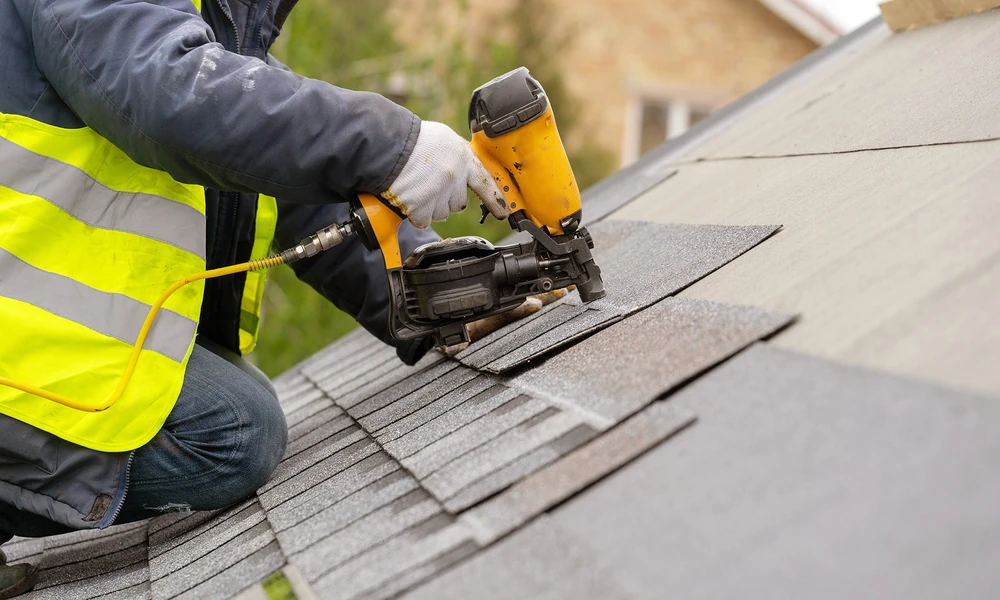
Offshore autumn gusts can unseal shingle tabs without tearing them away. Gluing a tab back down with a dab of cement looks fine, but if the nails have backed out or the shingle cracked along its fold, the next gust lifts it again. A proper repair removes the damaged pieces, renails the course with correct placement, and weaves new material in so every overlap stays intact. Matching color on an older roof is often impossible, which is why some owners keep a leftover bundle from the original installation in the garage.
Flashing at walls and chimneys
Where a roof meets a stucco wall or a chimney, step flashing and counterflashing do the real work. Patches here tend to be heavy smears of mastic that crack as masonry and wood expand at different rates through hot days and cool nights. A true repair means lifting the nearby roofing, installing new step flashing piece by piece, and tucking counterflashing into the wall so the two layers overlap. It is slower and fussier, and it is the most common place a “fixed” leak comes back.
Cracked or slipped tiles
Concrete and clay tile are tough, yet one cracked tile rarely causes a leak on its own. Tile roofs shed most water at the surface and rely on the underlayment for the rest. Swapping the broken tile is the patch. On a roof installed decades ago, the repair may mean pulling a section of tile, replacing the worn felt beneath with modern underlayment, and relaying the original tiles. A good roofer will also say so when the underlayment across the whole roof is near the end, which shifts the conversation toward a replacement plan.
Valleys
Valleys carry more water than any other part of a roof, along with leaves and grit. Debris dams up, water backs under the edges, and the leak appears somewhere that seems unrelated. Clearing the valley and caulking a seam is the quick answer. Rebuilding it with fresh underlayment and either open metal or properly cut shingles restores the channel the roof was designed around.
Questions That Sort One Estimate From Another
Quotes for the same leak can differ by several hundred dollars, and the cheapest one is often the patch. A handful of questions usually reveals which kind of work is on offer.
- Where do you think the water is actually entering, and how did you figure that out?
- Will you replace flashing or underlayment, or only work on the surface?
- What happens if you find rotted decking once the roofing is lifted?
- Is the price fixed, or could it change after work starts?
- How long is the workmanship guaranteed?
Licensing and payment terms deserve a minute too. The California Attorney General’s office publishes guidance on hiring a contractor, which covers verifying a state license, insisting on bonding and insurance, and spotting door-to-door roofing offers that disappear once paid. It also notes that a home improvement down payment cannot legally exceed 10 percent of the job or $1,000, whichever is less.
When a Patch Is the Honest Answer
Patches have their place. During an atmospheric river, a tarp or temporary seal that keeps water out of the attic until the roof dries is exactly the right move. A roof within a year or two of planned replacement may not justify rebuilding a valley that will be torn off soon anyway. And on a sound roof with one small, clearly identified problem, a targeted fix may be all the job requires.
The trouble begins when a temporary measure is presented as permanent, or when patches stack on patches until nobody remembers where the original leak was. A roof with mastic smeared across half a dozen spots is usually telling its owner something about its overall condition.
Knowing When a Roof Has Run Out of Fixes
Every repair decision eventually brushes up against a bigger one. Composition shingle roofs in hot inland climates often show their age somewhere between 18 and 25 years through curling edges, bald patches where granules have washed off, and brittle tabs that crack when lifted. Once repairs start calling for more material than a few bundles, or leaks appear in several unrelated spots during the same season, the money usually goes further toward replacement.
Short of that point, a well-done repair can add real years to a roof. The key is that it fixes the path water takes, not just the place it lands. Asking pointed questions, verifying who is working overhead, and keeping a simple record of what was done each time gives a homeowner a much clearer picture of what the roof needs and how much life it still has left.