Jack Jones
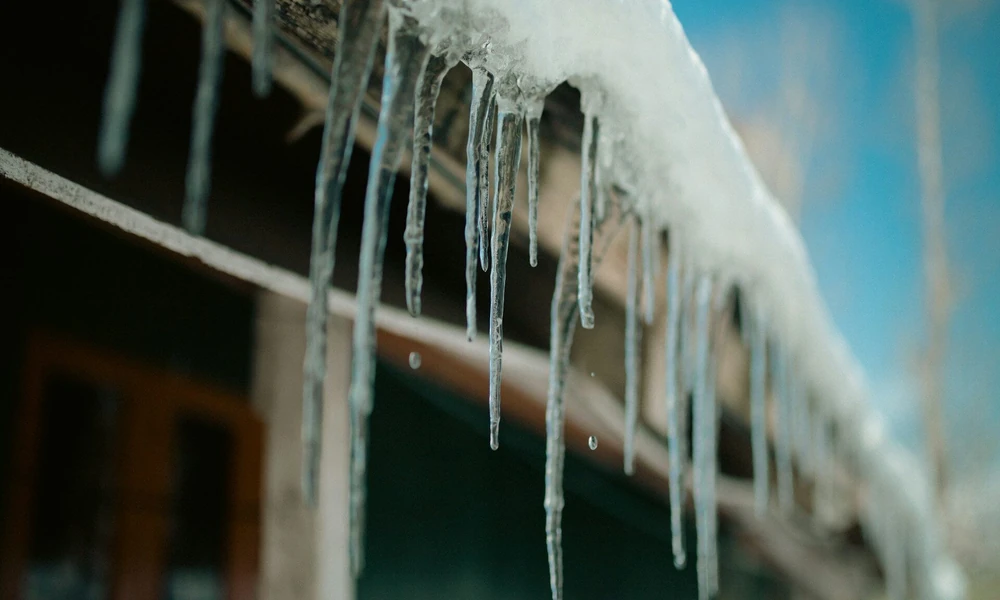
On a cold January morning in the Treasure Valley, with inversion haze hanging over the rooftops, the houses on one street can look very different. Some roofs are still evenly white from ridge to gutter. Others have bare stripes melted between the rafters and a row of icicles along the eaves. Most people think the icicles look nice. They’re actually a sign that heat is escaping into the attic, and the reason has little to do with the shingles. It’s happening a few feet below them.
Roofing crews who also install insulation and gutters see this more clearly than most, because all three trades meet at that same frozen edge. The family-owned team at Energy Shield Idaho works on homes across Boise, Meridian, Nampa, Eagle, Kuna and nearby towns. After looking at enough winter leaks, a roofer learns that a stain on a bedroom ceiling usually started inside the house and only became a roof problem later.
The clearest way to understand an ice dam is to follow the heat. It starts at your thermostat and ends with ice packed into a gutter.
Warm Air Finds the Ceiling’s Weak Spots
Heated air rises, and in winter it presses against the top floor ceiling like water against a dam. Drywall itself stops it well enough. The trouble is the openings cut into the drywall. Builders and remodelers make dozens of them, and very few get sealed properly.
The usual leak points in a typical Boise ranch or two-story house include:
- Recessed can lights, especially older models not rated for contact with insulation
- The attic hatch or pull-down stairs, which often have no gasket at all
- Gaps around plumbing vent pipes and electrical wires that pass through the top plates of walls
- The open space around a fireplace chimney chase
- Bathroom exhaust fan housings and the duct joints above them
- Heating ducts and register boots that run through the attic
Each gap may look minor, but together they can add up to an opening the size of a small window, open all winter. The warm, moist air that escapes doesn’t spread out evenly. It collects in certain spots, and those spots are where the snow melts first.
The Attic Floor Should Act Like an Exterior Wall
Insulation slows heat moving through the ceiling, but only if there’s enough of it and it’s in good condition. Many valley homes built in the seventies, eighties and early nineties still have their original R-19 to R-30. ENERGY STAR recommends R-49 to R-60 for attic floors in a climate like southern Idaho’s. Years of storage boxes, a furnace technician’s footprints, or wind blowing in through the soffits can flatten or shift what was there, leaving bare patches you can’t see from the hatch.
Loose fiberglass also doesn’t block air. It works more like a furnace filter. When an insulation crew pulls back old batts and finds gray or black streaks, those are the paths warm air has been taking for years, leaving dust behind as it passes through. So the order matters. Seal the leaks first, then add insulation. If you skip the sealing, the new insulation just hides the same leaks.
A Cold Roof Deck Is the Goal
Ventilation is the last part of the attic system. Cold outdoor air should enter through the soffit vents, move along the underside of the roof deck, and leave at the ridge. That airflow keeps the roof sheathing close to the outdoor temperature, so snow on top stays frozen instead of melting from below.
Two things often go wrong here. When insulation is blown in without foam or cardboard baffles at the eaves, it can pack into the soffits and block the intake vents. In those attics, Treasure Valley inspectors sometimes find frost on the tips of roofing nails during a long inversion. That’s moisture from the house freezing on the coldest metal it can reach. When the weather warms up, it all melts at once and drips onto the drywall.
Ventilation can’t make up for big air leaks, though. The University of Massachusetts Building and Construction Technology program explains that insulation and ventilation have to work together, and that adding vents to a leaky attic rarely fixes the problem.
Where Melting Snow Turns Into a Dam
Snow melts over the warm part of the roof, and the water runs down until it reaches the overhang. The overhang sits outside the heated part of the house, so it’s as cold as the outdoor air. The water freezes there and builds into a ridge of ice. More water arrives behind it, finds nowhere to go, and pools.
Southern Idaho’s weather makes this worse. A snowstorm is often followed by bright, sunny afternoons and very cold nights, so the roof can thaw and refreeze several times in a single week. Valleys, low-slope porch roofs, and the area where an upper roof drains onto a lower one take the most water.
Shingles are designed to shed water running downhill. They can’t keep out a pool of water pushed up under them by ice. Once the water gets past the shingle laps, it soaks into the decking, follows the rafters, and shows up as a brown stain near an outside wall, often many feet from where it got in.
Gutters Get Blamed for a Problem They Didn’t Cause
Gutters are often blamed for ice dams, but a perfectly clean gutter can still fill up with ice if the attic is leaking heat. Clogged gutters do make it worse. Leaves from the valley’s mature shade trees hold meltwater right at the roof edge, where it freezes quickly.
A gutter packed with ice can weigh hundreds of pounds per section. That weight bends hangers, pulls screws out of the fascia, and tilts the whole run outward so water drains behind it next time. Frozen downspouts cause another problem. Water spills over the gutter and freezes on sidewalks and driveways, which is how many winter falls happen. Heat cables can keep a channel open, but they treat the symptom and cost money to run every season.
Signs That Show Up Before a Leak Does
From the street. Look for icicles in some places but not others, and for bare stripes on an otherwise snowy roof. Both point to uneven heat loss.
On the eaves. Peeling paint on the soffits, swollen fascia boards, and rust streaks under gutter seams mean water has been sitting where it shouldn’t.
In the attic. Damp or matted insulation near the eaves, dark spots on the north-facing roof boards, and frost on nails during cold spells are worth having someone look at.
Indoors. Faint rings on ceilings near outside walls and a musty smell in upstairs closets often show up a season or two before an obvious drip.
Fixing the Cause in the Right Order
The lasting fix works from the inside out. Air-seal the ceiling, bring the insulation up to a modern level, and make sure the soffits and ridge can actually move air. When the roof is eventually replaced, a self-adhering ice barrier membrane along the eaves gives extra protection in the spot that gets the most standing water.
If a dam has already formed, a roof rake used from the ground can pull back the bottom few feet of snow and take away much of the meltwater feeding it. Chipping at the ice with a hammer or shovel usually damages the shingles more than the ice does. Professionals remove stubborn dams with low-pressure steam instead.
If you see a row of icicles on your house this winter, take it as a clue and follow it back to the attic.